
2023 Ford Trailer Tow Guide: A Comprehensive Overview
This guide details Ford’s 2023 towing capabilities, covering trucks like the F-150, F-250, and Ranger. It explores hardware, safety, and technology for optimal towing performance.
Ford trucks consistently rank among the leaders in towing capacity, and the 2023 lineup continues this tradition. This year’s models offer a diverse range of options, from the versatile Ranger to the heavy-duty F-450, ensuring a suitable solution for nearly any towing need. Understanding these capabilities is crucial for owners planning to haul trailers, boats, or other substantial loads.
The 2023 Ford Trailer Tow Guide provides detailed specifications for each model, outlining maximum towing and payload capacities. Factors like engine choice, axle ratio, and cab configuration significantly influence these numbers. Furthermore, Ford integrates advanced technologies like Pro Trailer Backup Assist and Smart Trailer Tow Connector to simplify the towing experience and enhance safety. This guide will navigate the complexities of towing, empowering owners to utilize their Ford trucks effectively and responsibly.
Understanding Towing Terminology
Several key terms are essential when discussing towing capacity and safety. Gross Vehicle Weight Rating (GVWR) represents the maximum permissible weight of the fully loaded vehicle, including passengers, cargo, and the tongue weight of the trailer. Gross Combined Weight Rating (GCWR) is the maximum allowable weight of the vehicle and the fully loaded trailer.
Payload capacity defines the maximum weight you can carry in the vehicle’s bed or cabin. Unbraked towing capacity refers to the maximum weight of a trailer without its own brakes, typically limited to 750 kg. Braked towing capacity, conversely, applies to trailers equipped with brakes. Understanding these distinctions, alongside terms like ‘tongue weight’ and ‘center axle’, is vital for safe and legal towing operations, ensuring optimal performance and preventing potential hazards.
Key Factors Affecting Towing Capacity
Numerous elements influence a 2023 Ford’s maximum towing capability. Engine choice is paramount; more powerful engines generally allow for higher towing capacities. Axle ratios also play a crucial role, with lower ratios providing greater torque for pulling heavy loads. Drive type – 4×2 versus 4×4 – impacts capacity, with 4×4 often offering increased traction and potentially higher limits.
Vehicle configuration, including cab size and bed length, affects payload and, consequently, towing. Proper equipment, such as a weight distribution system and trailer brakes, is essential for maximizing safe towing. Adhering to GVWR and GCWR is non-negotiable. Ignoring these factors can lead to diminished performance, compromised safety, and potential legal issues. Careful consideration of these elements ensures responsible and effective towing.

Ford Truck Models & Towing Specs (2023)
This section details the 2023 Ford F-150, F-250/F-350, F-450, and Ranger’s towing specifications, providing a clear overview of each model’s capabilities.
Ford F-150 Towing Capacity (2023)
The 2023 Ford F-150 boasts impressive towing capabilities, varying significantly based on configuration. Properly equipped, certain F-150 models can achieve a maximum conventional towing capacity of up to 13,200 pounds. When paired with the powerful EcoBoost engines and the Max Trailer Tow Package, the F-150 truly shines.
However, it’s crucial to remember that these figures are maximums. Actual towing capacity is influenced by factors like engine choice (ranging from the 2.7L EcoBoost to the 5.0L V8 and the 3.5L PowerBoost Full Hybrid), axle ratio, cab configuration, and whether it’s a 4×2 or 4×4 model.
Furthermore, fifth-wheel and gooseneck towing capacities can reach up to 22,000 pounds with the appropriate setup. Owners should always consult their specific vehicle’s doorjamb sticker and the Ford Towing Guide for precise towing specifications related to their individual truck.
Ford F-250/F-350 Towing Capacity (2023)
The 2023 Ford F-250 and F-350 Super Duty trucks are built for serious towing. Equipped with the 6.7L Power Stroke Diesel engine, these trucks deliver exceptional performance. Maximum conventional towing can reach an impressive 20,000 pounds, while fifth-wheel towing can climb to a staggering 22,800 pounds, depending on configuration.
Similar to the F-150, specific towing capacity depends on several variables. These include engine selection (gasoline or diesel), axle ratio, cab style, drive type (4×2 or 4×4), and installed options like the fifth-wheel/gooseneck hitch.
The F-350 generally offers slightly higher towing capacities than the F-250 due to its increased GVWR and axle ratings. Always refer to the vehicle’s doorjamb label and the official Ford Towing Guide to determine the precise towing capacity for your specific truck configuration.
Ford F-450 Towing Capacity (2023)
The 2023 Ford F-450 Super Duty represents the pinnacle of Ford’s towing capability. Designed for the most demanding tasks, it boasts class-leading towing numbers. When properly equipped with the 6.7L Power Stroke Diesel engine and dual rear wheels, the F-450 can achieve a maximum conventional towing capacity of up to 14,000 pounds.
However, its true strength lies in fifth-wheel towing, reaching an astounding 25,000 pounds. Like other Ford trucks, capacity is heavily influenced by factors like engine choice, axle ratio, cab configuration, and installed equipment.
The F-450’s robust chassis and heavy-duty components provide exceptional stability and control when hauling substantial loads. Consult the vehicle’s doorjamb sticker and the official Ford towing guide for precise figures related to your specific vehicle build.
Ford Ranger Towing Capacity (2023)
The 2023 Ford Ranger offers a compelling blend of capability and efficiency for mid-size truck buyers. When equipped with the available Tow/Haul mode and the right configuration, the Ranger delivers respectable towing performance. With the 2.3L EcoBoost engine and Max Trailer Tow Package, the Ranger achieves a maximum towing capacity of 7,500 pounds.
This makes it suitable for towing smaller campers, boats, or utility trailers. Payload capacity is also important, reaching around 1,805 pounds, depending on the configuration. Factors like cab style, drivetrain, and axle ratio influence these numbers.
Always refer to the Ranger’s doorjamb sticker and the official Ford towing guide to determine the precise towing capacity for your specific vehicle.

Towing Hardware & Equipment
Essential towing components include hitches, weight distribution systems, and trailer brakes. Safety chains and tow straps are also crucial for secure and controlled trailer hauling.
Hitches: Types and Selection
Choosing the right hitch is paramount for safe towing. Several types are available, each suited for different towing needs and vehicle capacities. Receiver hitches, categorized by their opening size (typically 2-inch or 2.5-inch), are the most common, offering versatility for various trailer couplers.
Ball mounts insert into the receiver and provide the ball for trailer attachment; their rise or drop adjusts for level towing. Gooseneck hitches, installed in the truck bed, offer superior stability for heavy loads, while fifth-wheel hitches provide even greater capacity and control.
Weight capacity is the key selection factor. Ensure the hitch’s maximum gross trailer weight rating (GTWR) and tongue weight capacity exceed the trailer’s specifications. Consider the trailer coupler size and the vehicle’s towing capacity when making your choice. Proper installation is critical; professional installation is recommended to guarantee safety and compliance.
Weight Distribution Systems Explained
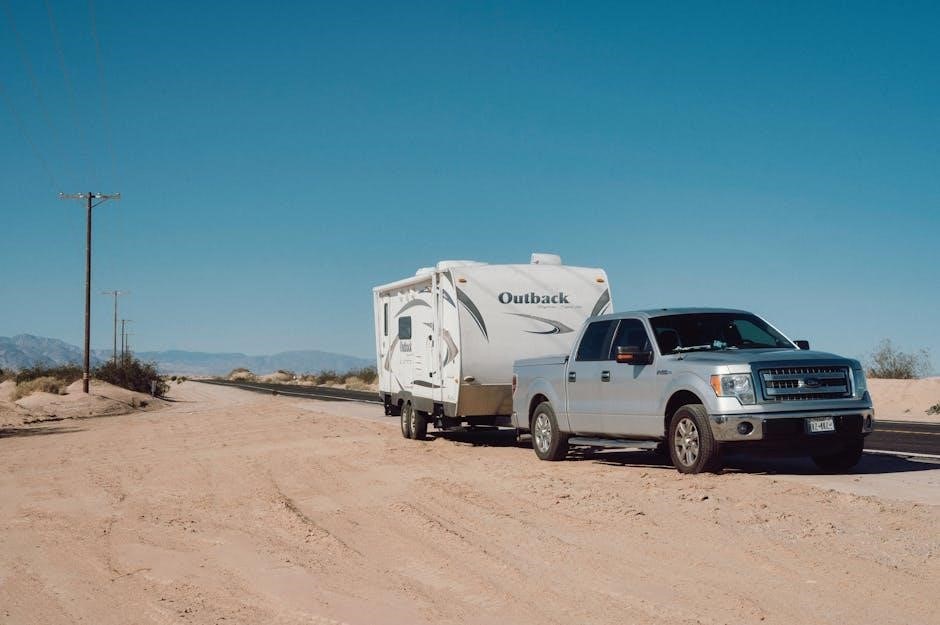
Weight distribution systems are crucial for maintaining vehicle control when towing heavier trailers. They mitigate trailer sway and improve handling by redistributing weight across all axles of the tow vehicle and trailer. These systems utilize a spring bar and a hitch head to transfer a portion of the trailer’s tongue weight to the front axle of the tow vehicle.
This redistribution levels the vehicle, reducing rear-end sag and improving steering responsiveness. Weight distribution systems are particularly beneficial for trucks approaching their maximum towing capacity or experiencing excessive rear suspension compression.
Proper setup and adjustment are essential for optimal performance. The system must be correctly matched to the trailer’s weight and the tow vehicle’s specifications. Regular inspection and maintenance are also vital to ensure continued safe operation and prevent component failure.
Trailer Brakes: Electric vs. Hydraulic
When towing substantial loads, trailer brakes are essential for safe stopping. Two primary types exist: electric and hydraulic. Electric trailer brakes utilize an electrical signal from the tow vehicle to activate electromagnets within the trailer’s brake drums. These are commonly found on heavier trailers and offer proportional braking control, adjusting braking force based on the tow vehicle’s deceleration.
Hydraulic trailer brakes, conversely, employ a hydraulic line connected to the tow vehicle’s braking system. When the tow vehicle’s brakes are applied, hydraulic pressure is sent to the trailer’s brakes, activating them. These systems are often found on lighter trailers and are simpler in design.
Ford vehicles often feature integrated trailer brake controllers, simplifying the connection and operation of electric trailer brakes. Selecting the appropriate brake type depends on the trailer’s weight and the tow vehicle’s capabilities, ensuring optimal stopping performance and safety.
Tow Straps and Safety Chains
While not primary towing components, tow straps and safety chains are crucial for emergency situations and overall safety. Tow straps, constructed from durable webbing, are designed for pulling a disabled vehicle – they should never be used for actual towing; Always use appropriately rated straps, ensuring they exceed the weight of the vehicle being moved.
Safety chains are paramount when towing a trailer. They provide a critical backup in case the trailer hitch fails. Cross the chains beneath the trailer tongue, allowing for limited movement while preventing complete separation. Ensure sufficient slack to allow for turning, but avoid excessive slack that could cause dragging.

Regularly inspect both tow straps and safety chains for wear, fraying, or damage. Properly secured and maintained, these components offer an essential layer of protection during towing operations.

Calculating Your Towing Capacity
Accurately determining your vehicle’s towing capacity involves understanding GVWR, GCWR, and payload. These ratings dictate safe towing limits for Ford trucks.
Gross Vehicle Weight Rating (GVWR)
The Gross Vehicle Weight Rating (GVWR) represents the maximum permissible weight of your fully loaded Ford vehicle – including the vehicle itself, passengers, cargo, and the tongue weight of any trailer it’s towing. Exceeding the GVWR is a serious safety concern and can lead to compromised handling, increased braking distances, and potential mechanical failures.
Ford provides the GVWR for each vehicle on a sticker typically located on the driver’s side doorjamb. It’s crucial to consult this sticker, not just rely on estimations. Calculating your actual weight is essential; weigh your vehicle at a certified scale with everything loaded as if you were towing. Remember, GVWR isn’t about how much your vehicle can pull, but how much it can carry – both inside and the weight pressing down on the hitch.
Properly understanding and adhering to the GVWR is a fundamental aspect of safe towing practices with your 2023 Ford truck.
Gross Combined Weight Rating (GCWR)
The Gross Combined Weight Rating (GCWR) is the maximum allowable weight of your Ford vehicle and a fully loaded trailer combined. It encompasses the GVWR of the truck itself, plus the total weight of the trailer – including its cargo. Unlike GVWR, GCWR focuses on the total system weight when towing.
Ford specifies the GCWR for each vehicle configuration, considering engine, axle ratio, and other factors. This information is also found on the vehicle’s doorjamb sticker or in the owner’s manual. Determining GCWR is vital because exceeding it can severely impact vehicle control and braking performance, creating a dangerous situation.
Calculating GCWR requires knowing both the GVWR of your truck and the total weight of your loaded trailer. Always ensure the sum of these two weights remains within the specified GCWR for your specific 2023 Ford model.
Payload Capacity and Its Importance
Payload capacity represents the maximum weight your 2023 Ford truck can carry – including passengers, cargo, and the tongue weight of a trailer. It’s a critical factor often overlooked when planning to tow. Exceeding payload capacity compromises handling, braking, and overall vehicle stability, significantly increasing safety risks.
Payload is determined by subtracting the vehicle’s weight (as it leaves the factory) from the Gross Vehicle Weight Rating (GVWR). Remember to account for all additions – passengers, fuel, accessories, and crucially, the tongue weight. Tongue weight is the amount of trailer weight pressing down on the hitch.
Properly managing payload is essential for safe towing. Always calculate the total weight you’re adding to the truck and ensure it remains within the specified payload capacity. Ignoring this can lead to tire failure, suspension damage, and loss of control.
Determining Actual Towing Capacity
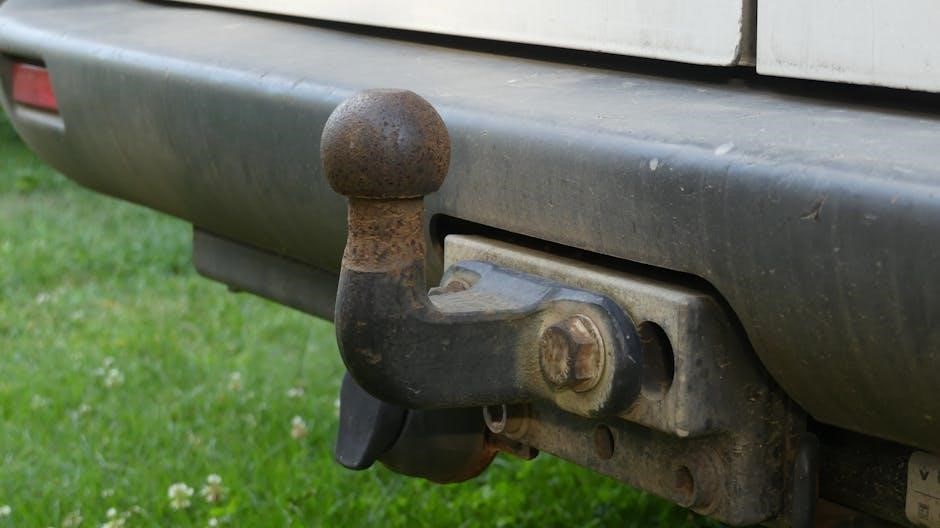
Your 2023 Ford’s advertised towing capacity is a maximum figure achieved under specific, ideal conditions. The actual towing capacity is often lower and depends on several variables. It’s crucial to calculate this realistically for safe towing.
Start with the Gross Combined Weight Rating (GCWR) – the maximum permissible weight of the truck and trailer combined. Subtract the truck’s weight (including payload – passengers, cargo, and tongue weight) from the GCWR. The result is your realistic maximum trailer weight.
Consider engine, axle ratio, drivetrain, and cab configuration, as these significantly impact towing capacity. Consult your owner’s manual for specific charts and calculations related to your vehicle. Never exceed the lowest weight rating of any component in the towing system.

Safety Considerations When Towing

Prioritize proper loading, adhere to speed limits, perform thorough pre-tow inspections, and understand emergency procedures for secure 2023 Ford towing.
Proper Trailer Loading Techniques
Achieving optimal trailer loading is paramount for safe towing with your 2023 Ford. Distribute weight evenly, with approximately 60% of the load positioned towards the front of the trailer. This prevents sway and maintains vehicle control. Secure cargo thoroughly using straps, chains, or netting to eliminate shifting during transit.
Avoid overloading the trailer, always staying within its weight capacity and your Ford’s towing limits. Consider the tongue weight – typically 10-15% of the total trailer weight – as it significantly impacts handling. Too little tongue weight can cause trailer sway, while too much can strain the hitch.
Lower the trailer’s center of gravity by placing heavier items closer to the floor. Regularly check load security during your trip, especially after the first few miles, to ensure everything remains stable. Proper loading dramatically enhances towing safety and vehicle performance.
Towing Speed Limits and Regulations
Adhering to towing speed limits and regulations is crucial for safety when operating your 2023 Ford. While specific limits vary by state and jurisdiction, a general rule is to reduce your speed compared to normal driving conditions. Many areas enforce lower speed limits for vehicles towing trailers, often around 65 mph, but always verify local laws.
Be aware of bridge clearances and weight restrictions on roadways. Plan your route carefully, avoiding low overpasses or roads with weight limitations that your loaded Ford and trailer might exceed. Regulations also cover trailer lighting, braking systems, and safety chains – ensure your setup complies with all applicable standards.
Regularly check your mirrors and maintain increased following distances when towing. Familiarize yourself with state-specific towing guidelines to ensure a safe and legal journey with your 2023 Ford.
Pre-Tow Inspection Checklist
Before each towing journey with your 2023 Ford, a thorough inspection is paramount for safety. Begin with the hitch – verify it’s securely attached and properly rated for your trailer’s weight. Inspect the trailer wiring harness, ensuring all lights (brake, turn, and running lights) function correctly.
Check tire pressure on both the Ford and the trailer, inflating to the manufacturer’s recommended specifications. Examine the safety chains and ensure they are crossed and have sufficient slack. Verify the trailer brakes are operational, and test the breakaway system.
Finally, confirm the load is properly distributed within the trailer, avoiding excessive weight on the tongue. A pre-tow walkaround will identify any potential issues before hitting the road, contributing to a safer towing experience with your 2023 Ford.
Emergency Procedures While Towing
Unexpected situations can arise while towing with your 2023 Ford; preparedness is key. If a tire blows out, avoid sudden braking – grip the steering wheel firmly and gradually slow down. Activate your hazard lights immediately to alert surrounding traffic.
Should the trailer begin to sway, reduce speed and avoid abrupt steering corrections. Gently apply the trailer brakes if equipped, and allow the sway to subside naturally. In the event of a brake failure, downshift to a lower gear to utilize engine braking.
Always carry emergency contact information and a roadside assistance plan. Knowing these procedures and remaining calm can significantly mitigate risks during towing emergencies with your 2023 Ford, ensuring a safer journey.

Ford Towing Technology & Features
Ford’s innovative features, like Pro Trailer Backup Assist and Smart Trailer Tow Connector, enhance control and simplify the towing experience for 2023 models.
Pro Trailer Backup Assist
Ford’s Pro Trailer Backup Assist is a groundbreaking technology designed to dramatically simplify the often-challenging task of backing up a trailer. Utilizing a knob on the dashboard, drivers can control the trailer’s direction, while the system manages steering, braking, and throttle. This intuitive system significantly reduces the learning curve for new trailer owners and boosts confidence for experienced towers alike.
The system works by allowing the driver to input the desired direction via the knob – turning it left steers the trailer left, and vice versa. The truck’s smart technology then handles the complex steering adjustments needed to follow the input, even compensating for challenging situations. It’s a game-changer for maneuvering trailers into tight spaces, campsites, or boat ramps, minimizing frustration and maximizing control. Pro Trailer Backup Assist is a key feature in Ford’s commitment to making towing easier and safer.
Smart Trailer Tow Connector
The Smart Trailer Tow Connector is a sophisticated system integrated into select 2023 Ford trucks, designed to enhance the connection and communication between the truck and the trailer. This innovative feature goes beyond a standard wiring harness, providing a seamless link for vital trailer functions. It automatically detects the trailer’s lighting configuration and adjusts accordingly, eliminating the need for manual adjustments or compatibility concerns.
Furthermore, the Smart Trailer Tow Connector facilitates the operation of features like trailer light testing, ensuring all lights are functioning correctly before hitting the road. It also supports advanced functionalities like the Pro Trailer Backup Assist and Onboard Scales with Smart Hitch, providing a unified and intelligent towing experience. This connector simplifies setup, improves safety, and delivers a more convenient and reliable towing solution for Ford truck owners.
Onboard Scales with Smart Hitch
Ford’s Onboard Scales with Smart Hitch represent a significant advancement in towing technology for the 2023 model year. This system utilizes sensors integrated into the hitch receiver to measure trailer weight in real-time, displaying the information directly in the truck’s instrument cluster. This eliminates the guesswork and potential dangers associated with estimating trailer weight, ensuring the truck remains within its specified towing capacity.
The system provides crucial data, including tongue weight, payload capacity remaining, and gross combined weight rating (GCWR) available. This allows drivers to make informed decisions about loading and distribution, optimizing stability and control. By proactively monitoring weight, the Onboard Scales with Smart Hitch contribute to a safer and more confident towing experience, preventing overloads and potential mechanical issues;
Trailer Sway Control
Ford’s Trailer Sway Control is a vital safety feature integrated into the 2023 Ford truck lineup, designed to mitigate the potentially dangerous effects of trailer sway. Utilizing advanced sensors, the system continuously monitors the vehicle’s stability and detects any unwanted trailer movement. When sway is detected, Trailer Sway Control automatically applies the brakes to individual wheels, selectively slowing down the trailer and bringing it back into alignment with the towing vehicle.
This proactive intervention helps drivers maintain control and prevents sway from escalating into a loss-of-control situation; The system works seamlessly in the background, requiring no driver input once engaged. Trailer Sway Control significantly enhances towing confidence, particularly in challenging conditions like windy weather or uneven road surfaces, contributing to a safer journey for both the driver and other road users.